

LOCAL RESIDENTIAL PLUMBING SERVICE
Old Pipe Upgrades With Clear Answers and Careful Work
The pipes behind walls, below floors, and across utility spaces quietly support nearly every part of a home. When those lines age, corrode, leak, or restrict flow, the symptoms can appear throughout the property: weak pressure, discolored water, repeated pinhole leaks, noisy operation, or fixtures that compete for water. Papa Bear Plumbing and Services helps homeowners evaluate old water-supply piping and plan practical upgrades.
A pipe upgrade can range from replacing one unreliable section to repiping a larger part of the home. The right scope depends on material, condition, accessibility, leak history, water quality, layout, and the homeowner’s goals. We inspect what can be seen, ask about the problems you have experienced, identify priority areas, and explain whether a focused repair, phased plan, or broader replacement offers the most sensible path.
KNOW THE WARNING SIGNS
Common Signs You May Need This Service
- Frequent pinhole leaks or repairs in different parts of the home
- Rusty, yellow, brown, or metallic-tasting water
- Low pressure or weak flow when multiple fixtures are used
- Visible corrosion, mineral buildup, or dampness on exposed piping
- Unexplained water stains, musty areas, or rising water use
- Old galvanized, polybutylene, or mixed-material plumbing with a problem history
Why Older Water-Supply Pipes Become Unreliable
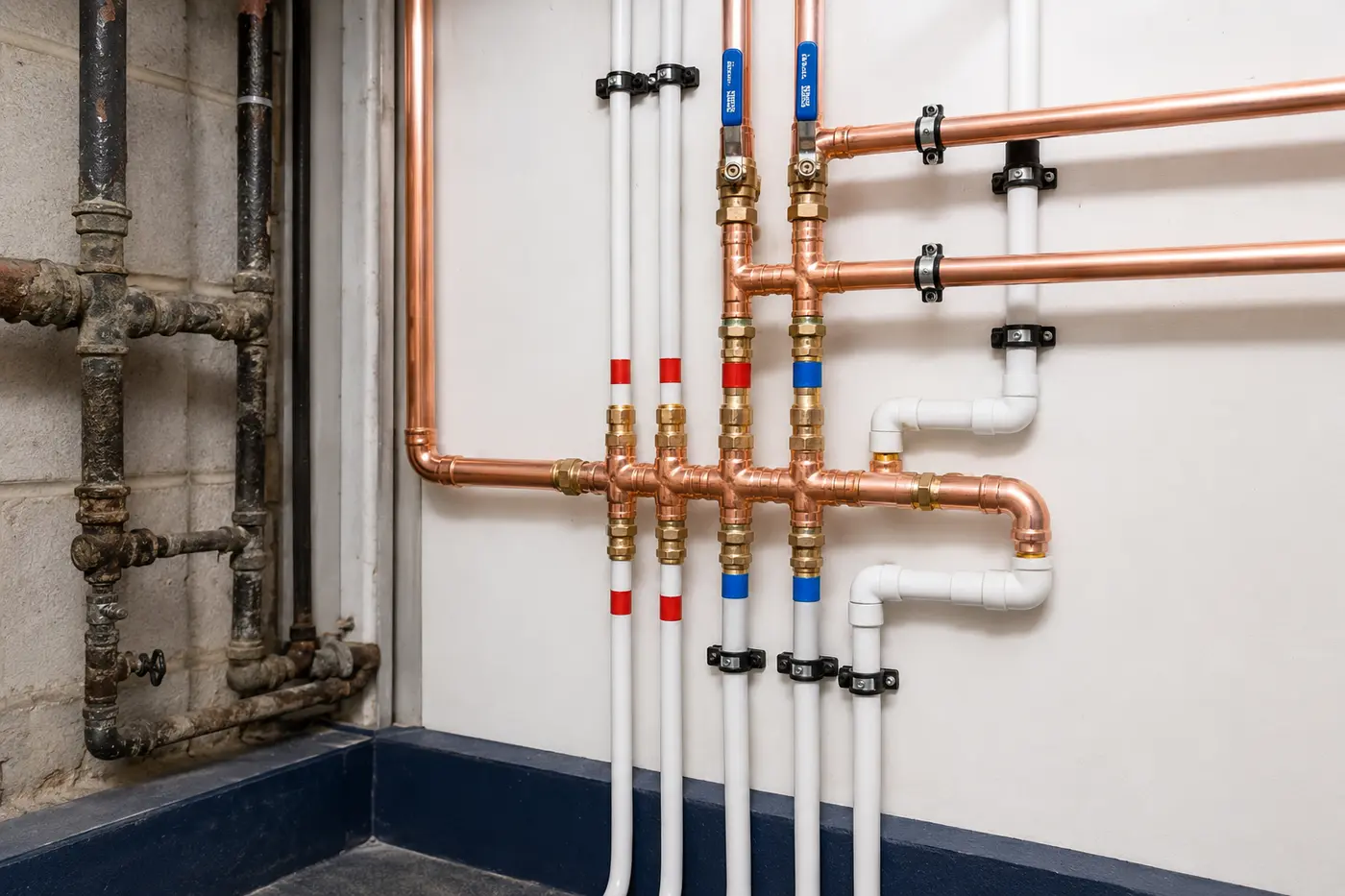
Pipe materials age in different ways. Galvanized steel can corrode internally, narrowing the opening and releasing rust into the water. Copper can develop localized corrosion or pinhole leaks under certain water and installation conditions. Plastic systems may become brittle, suffer fitting failures, or have a material-specific history that deserves evaluation. Connections between unlike metals can also corrode when they are not properly isolated.
Age alone does not reveal the full condition of a plumbing system. Water chemistry, pressure, temperature, workmanship, pipe support, movement, and past repairs all matter. Two homes built at the same time may have very different piping conditions. We look for patterns instead of assuming every old line needs immediate replacement or that one repaired leak means the rest of the system is sound.
Targeted Pipe Repair, Partial Upgrade, or Whole-Home Repiping?
A targeted repair may be appropriate when damage is isolated and the surrounding material remains in good condition. A partial upgrade can make sense when one accessible zone, fixture group, or problem material is causing most of the trouble. Broader repiping becomes worth considering when leaks occur repeatedly in different locations, corrosion is widespread, flow is restricted throughout the home, or ongoing patchwork is becoming disruptive and expensive.
The decision should account for more than the next leak. We discuss access, finished surfaces, future remodeling, how long you plan to own the home, and whether other plumbing work is already scheduled. Sometimes a phased plan allows high-risk areas to be addressed first. In other cases, completing a coordinated upgrade once can reduce repeated openings and service calls. Our recommendation is based on the visible evidence and your priorities.
Understanding Modern Pipe Material Options
Copper remains a familiar water-supply material with a long history, strong heat tolerance, and a clean, rigid installation when properly supported and joined. PEX is a flexible cross-linked polyethylene system that can reduce the number of fittings required and simplify routing through certain structures. Other approved materials may be appropriate for specific applications. Material availability and local requirements also influence the options.
There is no universal best pipe for every home. The right choice depends on water conditions, existing materials, temperature, pressure, exposure, access, budget, and the type of project. Fittings, supports, transitions, valves, and workmanship are just as important as the pipe itself. We explain the practical differences and use compatible components so the new system is serviceable and suited to the installation.
How We Plan a Residential Pipe Upgrade
Planning begins with the route. We identify where water enters the home, how branches serve fixtures, which lines are accessible, and where finished surfaces may limit work. We consider shutoff locations, pipe sizing, fixture demand, hot-water distribution, exterior exposure, and connections to existing equipment. A thoughtful route can reduce unnecessary openings and make future service easier.
Before work starts, homeowners should understand the proposed scope, expected water shutoff periods, access needs, and which surfaces may be affected. Furniture or stored belongings may need to be moved from work zones. Pets and children should remain away from tools and openings. If another contractor will repair drywall, cabinetry, or finishes, responsibilities should be clear. Good coordination prevents surprises and helps the plumbing work move efficiently.
Can New Pipes Improve Water Pressure and Flow?
New piping can improve flow when the existing lines are narrowed by corrosion, undersized for current demand, or arranged in a way that creates excessive restriction. Homeowners may notice the greatest difference when several fixtures are used at once. However, pressure and flow are not the same thing, and old pipes are only one possible cause of weak fixture performance.
The incoming water supply, pressure regulator, meter, valves, fixture cartridges, aerators, water treatment equipment, and the layout of the system can all influence performance. That is why we avoid promising a specific pressure increase before evaluation. We look for the actual limiting condition and explain which improvements are reasonably connected to the proposed pipe work.
Reducing the Risk of Hidden Water Damage
Small pipe leaks can remain hidden long enough to stain walls, soften materials, encourage odors, or damage nearby belongings. Warning signs include bubbling paint, warm or damp spots, unexplained sounds of running water, musty areas, and water use that rises without a change in habits. Visible corrosion or mineral deposits around fittings may also indicate a slow leak.
If you suspect an active leak, know where the main water shutoff is located and use it only when you can do so safely. Keep electrical hazards in mind when water is present. A pipe upgrade can reduce risk associated with known deteriorated sections, but no plumbing system is maintenance-free. Accessible shutoffs, periodic observation, and prompt response to small changes remain important after new piping is installed.
Why Installation Quality Matters as Much as the Pipe
Reliable repiping requires correct sizing, secure supports, compatible fittings, protected penetrations, sensible routing, and careful transitions to fixtures and equipment. Pipes need room for normal movement and must be protected where they pass through framing or encounter potentially damaging conditions. Valves and service points should remain accessible rather than being buried without thought.
After installation, the system is restored and tested methodically. Connections are checked, fixtures are flushed as appropriate, and the work is observed under operating conditions. We communicate any items outside the agreed plumbing scope, such as finish repairs or unrelated fixture issues. The result should not only look orderly where visible; it should function predictably and be easier to understand and service in the future.
Making a Pipe Upgrade Part of a Larger Home Plan
Repiping often makes the most sense when coordinated with other projects. A kitchen or bathroom remodel may create access to piping that would otherwise remain behind finished surfaces. Water-heater replacement, filtration work, fixture upgrades, or repairs after a leak can also provide an opportunity to correct weak points or improve shutoff access.
If a complete upgrade is not practical today, ask for a priority plan. Document the material and location of known problem areas, address active leaks, and identify which future project would create useful access. A staged approach should still use compatible materials and intentional transition points. We help homeowners think beyond a single patch while respecting the scope they are ready to complete.