

LOCAL RESIDENTIAL PLUMBING SERVICE
Hot Water Tank Replacement With Clear Answers and Careful Work
A dependable supply of hot water is easy to take for granted until the tank starts leaking, the shower turns cold, or the unit can no longer keep up with normal household demand. Papa Bear Plumbing and Services helps homeowners replace aging or failed hot water tanks with a properly selected system, careful installation, and clear guidance from the first inspection through final testing.
The goal is not simply to remove one tank and set another in its place. A good replacement considers the household’s hot-water use, the available fuel or power source, the condition of nearby plumbing, the installation space, drainage, venting, safety controls, and applicable local requirements. We explain what we find, discuss practical options, and complete the work with attention to reliability, efficiency, and long-term serviceability.
KNOW THE WARNING SIGNS
Common Signs You May Need This Service
- The tank is leaking, sweating, or collecting water around its base
- Hot water runs out faster than it used to
- Water takes too long to heat or never reaches a comfortable temperature
- The unit makes popping, rumbling, or banging sounds
- Hot water appears rusty, cloudy, or has an unusual odor
- Energy use has increased without a clear change in household habits
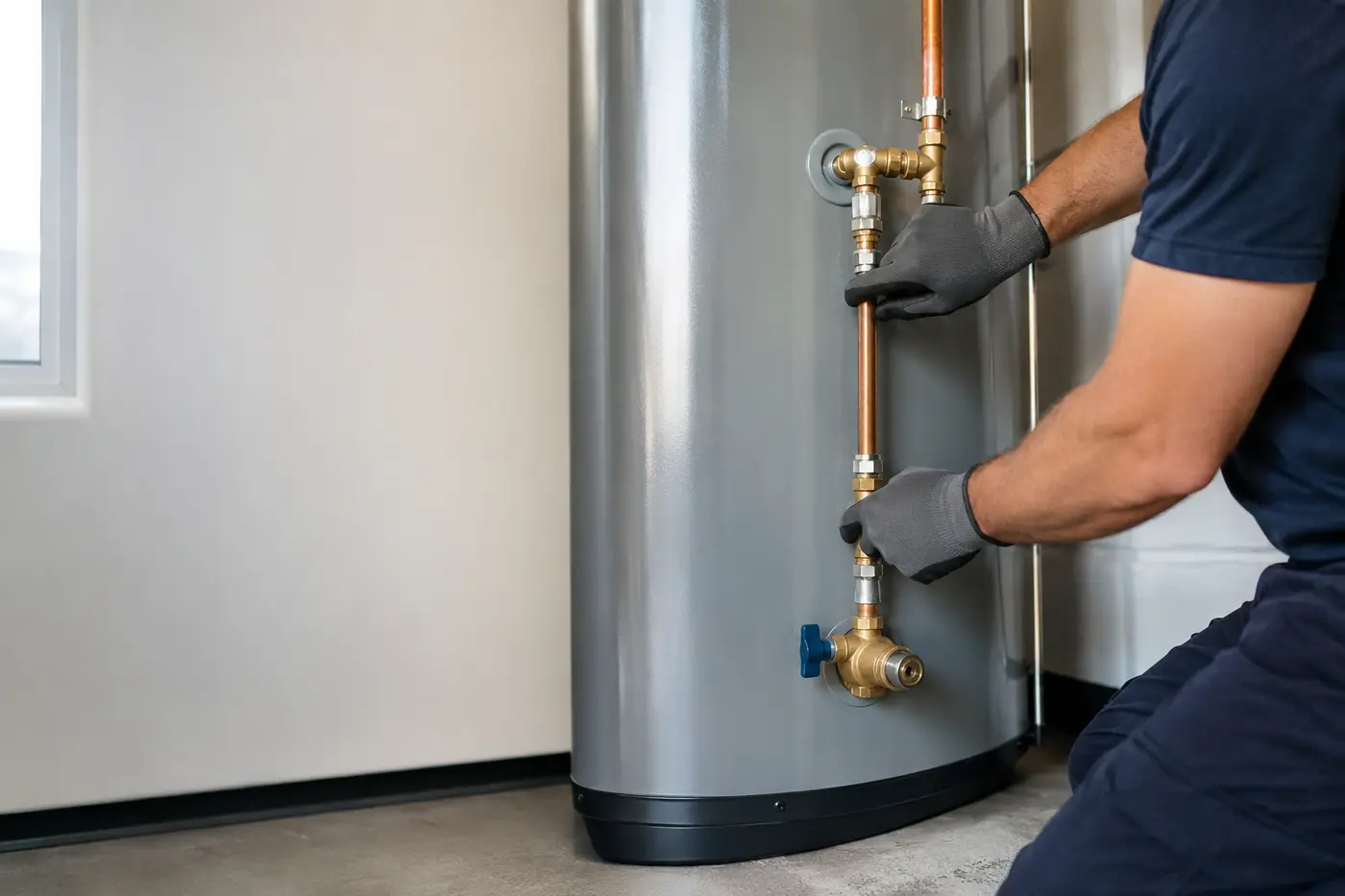
When Is It Time to Replace a Hot Water Tank?
Some water-heater problems can be corrected with a targeted repair. Others signal that the tank itself is deteriorating or that continued repairs are unlikely to be a good use of money. Water around the base of the unit is especially important to investigate. A loose fitting or valve may be repairable, but water coming through the tank body often indicates internal corrosion. Once the storage tank has failed, replacement is generally the practical path.
Age is useful context, but it should not be the only deciding factor. Water quality, maintenance history, installation conditions, household demand, and the quality of the original equipment all affect service life. An older tank that is heating consistently and remains dry may not need immediate replacement. A newer unit with recurring problems, heavy corrosion, or an active tank leak may need attention much sooner. We evaluate the whole situation instead of relying on one rule of thumb.
Water Heater Repair or Replacement: How We Evaluate the Choice
A clear recommendation starts with identifying the source of the problem. We look at the tank, controls, shutoff valve, visible supply connections, temperature-and-pressure relief components, drainage provisions, and the energy source serving the unit. For fuel-fired equipment, the surrounding venting and combustion setup also matter. The purpose of the evaluation is to separate a serviceable component problem from a tank or system problem that is likely to return.
Repair may make sense when the tank is sound and the issue is isolated, accessible, and proportionate to the unit’s remaining useful life. Replacement becomes more attractive when the tank leaks, corrosion is advanced, capacity no longer fits the home, breakdowns are becoming frequent, or a major repair would still leave an aging system in place. We discuss the tradeoffs in plain language so you can choose based on reliability, cost, and how long you expect the solution to serve the home.
Choosing the Right Size and Type for Your Home
A hot water tank should be sized around real household demand. The number of occupants matters, but so do the ways hot water is used. Back-to-back showers, large soaking tubs, laundry, dishwashing, and simultaneous fixtures can create very different peak demands in homes with the same number of people. An undersized tank may run cold too quickly. An unnecessarily large tank may cost more to purchase and keep hot without improving everyday comfort.
We also consider the existing energy source, available space, recovery needs, and the home’s plumbing configuration. A straightforward like-for-like replacement may be the best value, while another home may benefit from a different capacity or efficiency level. If you are considering a significant change in equipment type, we explain the additional electrical, fuel, venting, condensate, or plumbing work that could be involved. The recommendation should fit the home rather than forcing the home to fit a product.
What a Professional Hot Water Tank Replacement Includes
Before removal, the old unit is safely shut down, isolated, and drained. The surrounding area and access path are protected as needed. We remove the existing tank, prepare the installation area, and address visible connection issues that should not be carried into the new setup. The replacement is positioned so controls, shutoffs, service points, and required clearances remain accessible.
Installation details vary by system, but careful connection and testing are always essential. Water connections must be secure, safety components must be properly arranged, and the tank must be filled correctly before operation. Fuel-fired and electric units each have their own startup and verification steps. Once the new water heater is operating, we check for leaks, confirm heating performance, review the controls, and leave the work area clean. We also explain basic operation and any maintenance guidance that applies to the selected unit.
Improving Efficiency Without Sacrificing Hot-Water Comfort
Newer water heaters may offer better insulation, improved controls, and more efficient operation than the equipment they replace. Efficiency matters, but the best-performing option on paper is not automatically the best fit for every house. Installation cost, fuel availability, recovery rate, household schedule, space, maintenance needs, and expected ownership period all affect the real value of an upgrade.
We help homeowners compare practical benefits instead of focusing on a single specification. A correctly sized system that is installed well and matched to household demand can provide more consistent comfort and avoid unnecessary energy use. Small details around piping, temperature settings, and system condition also influence performance. Our role is to help you understand the choices and select a dependable solution that makes sense for the way your home uses hot water.
Protecting Your Home From Water Heater Leaks
A storage tank holds enough water to cause meaningful damage if a leak is not discovered quickly. Pay attention to moisture, staining, corrosion, musty odors, softened flooring, or unexplained sounds near the water heater. If you see active water, avoid touching electrical components or standing water around energized equipment. If it is safe and you know how, stop the water supply to the unit and call for help.
The installation location influences how a leak should be managed. Finished basements, interior utility closets, upper floors, and areas near stored belongings deserve special attention. Drain pans, drainage routes, accessible shutoffs, and leak-detection options may reduce risk when they are appropriate and permitted. During replacement, we can discuss the visible conditions around the tank and identify sensible improvements without turning a straightforward project into an unnecessary overhaul.
How to Help a New Hot Water Tank Last
After installation, routine attention can help the system operate reliably. Keep the area around the unit clear, look periodically for moisture or corrosion, and become familiar with the location of the water shutoff. Do not store materials against the tank or block combustion air, service access, controls, or vents. If the water temperature changes unexpectedly, the unit becomes noisy, or a relief pipe discharges, arrange an inspection rather than ignoring the change.
Maintenance needs depend on the equipment and local water conditions. Manufacturer instructions may include periodic inspection, flushing, or other service. Some tasks should be handled by a qualified professional, particularly when fuel, electricity, pressure, or safety controls are involved. We can explain the basic care appropriate for the installed tank and help you recognize the difference between normal operation and a warning sign.